Skip to main content Scroll Top
702 The Queensway S Unit #1, Keswick, ON L4P 4C9

Top 5 Post-Pregnancy Exercises: The Best Moves for New Moms

post-pregnancy exercises

Top 5 Post-Pregnancy Exercises: The Best Moves for New Moms

Ever wonder what post-pregnancy exercises you should be doing? We’ve picked the 5 best ones to get you started. Before diving into the exercises, let’s cover a few general guidelines.

General Guidelines Before You Start

  • Don’t start working out until about 6 weeks postpartum. If you had a natural, uncomplicated delivery, you may be able to start a bit sooner. If you had a C-section or a more complicated birth, you may need to wait longer than 6 weeks.
  • Never exercise through pain. If you feel pain, stop right away.
  • Beyond these 5 strengthening exercises, aim for 150 minutes per week of moderate aerobic exercise.
  • Exercise shouldn’t affect the volume or quality of your breast milk. However, high-intensity workouts can introduce some lactic acid into your milk, giving it a sour taste your baby may not love—so feed or pump before any high-intensity session.
👶 New to postpartum exercise? A quick check-in with your healthcare provider can help confirm you're ready to start.

1. Kegels

Kegels are essential for strengthening your pelvic floor muscles, which support your uterus, bladder, rectum, and small intestine. You should be doing these multiple times a day.
Ejercicios de Kegel para fortalecer el suelo pélvico en mujeres

2. Planks

We know this exercise isn’t everyone’s favorite, but it’s the best move for strengthening your intrinsic abdominal muscles. Start on your knees and elbows, then gradually work your way up to doing them on your toes. Eventually, aim to hold a plank for 2.5 minutes—but start by holding for 20 to 30 seconds, taking a 10-second break, and repeating 2 more times.

💪 Building your core back up? A guided plan can help you progress safely from your knees to full planks.

3. Side Planks

Just when you thought you were done with planks—here’s another one. This exercise works your obliques, or “side abdominal” muscles, and is great because it lets you keep your back nice and straight while you build strength. Start by holding for 20 to 30 seconds and repeat for 3 sets total. Begin on your knee and progress to your toes as you get stronger.

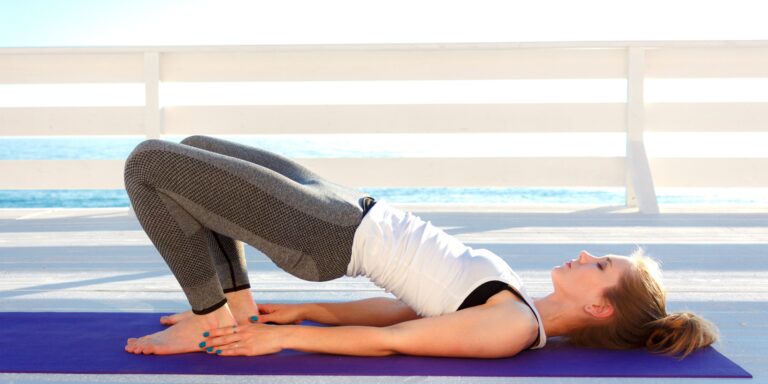
4. Pelvic Tilts

Now that we’ve worked the core and pelvic floor muscles, it’s time for glutes. Your glutes get weak during pregnancy, and if you weren’t working out while pregnant, they’re likely to still be weak now. Lying on your back, push your buttocks upward and hold for 5 to 10 seconds, then return to your starting position. Repeat 10 times to start.

🍑 Ready to rebuild glute strength after pregnancy? These moves are a great place to start.

5. Squats

Last but not least: squats, to strengthen your glutes and legs. Make sure you’re doing them correctly—chest proud, feet hip-width apart, and hips back like you’re about to sit in a chair. Watch yourself in a mirror: are your knees traveling too far forward, past your toes? If so, you’re not sitting back enough. Try to get as deep as you comfortably can in the squat, hold for a few seconds, then return to standing. Repeat 10 times to start.

Key Takeaways

Postpartum exercise should start gradually, ideally after about 6 weeks, and always stop if you feel pain. Kegels, planks, side planks, pelvic tilts, and squats together rebuild your pelvic floor, core, and glute strength—the foundation for feeling strong again after pregnancy.

Ready to Start Your Postpartum Fitness Journey?

If you have questions about which exercises are right for you after pregnancy, reach out to schedule a consultation.

Frequently Asked Questions

Generally around 6 weeks postpartum, though this can vary depending on whether you had a natural delivery or a C-section. Always get clearance from your healthcare provider first.

Exercise shouldn’t affect the volume or quality of your milk overall, but high-intensity workouts can temporarily add lactic acid to your milk, which may give it a sour taste. Feeding or pumping beforehand can help avoid this.

Start with 20 to 30 seconds, take a 10-second break, and repeat 2 more times. Over time, work toward holding a plank for up to 2.5 minutes.

Stop immediately. You should never exercise through pain, especially during the postpartum recovery period.

Call to book